The Short Answer
The fastest way to cut down setup and teardown time for a component-heavy game is sorting pieces once, by type, into small bags or containers — rather than mixing everything back into one compartment after every play and re-sorting it from scratch next time.
Resealable Plastic Bags: The Simplest Option
Small resealable bags, sorted by piece type or by player color, are the cheapest and most flexible way to organize components. They work for almost any game regardless of the box’s original layout, and different bag sizes accommodate everything from tiny resource cubes to full player kits. The tradeoff is that loose bags inside a box can still shift around during transport or storage, so it helps to keep them upright or use a divider to stop them sliding into a jumbled pile again over time.
Small Containers and Compartment Boxes
Divided plastic containers, the kind sold for craft or hardware storage, hold up better than bags to repeated opening and closing and make it easier to see what’s inside without unzipping anything. These work particularly well for games with many small, similar-looking tokens that are easy to lose individually if loose in a bag. The main downside is that rigid containers take up more physical space in the box than flat bags, which can be a real constraint for games that already pack the box tightly.
Box Inserts: The Higher-Effort, Higher-Payoff Option
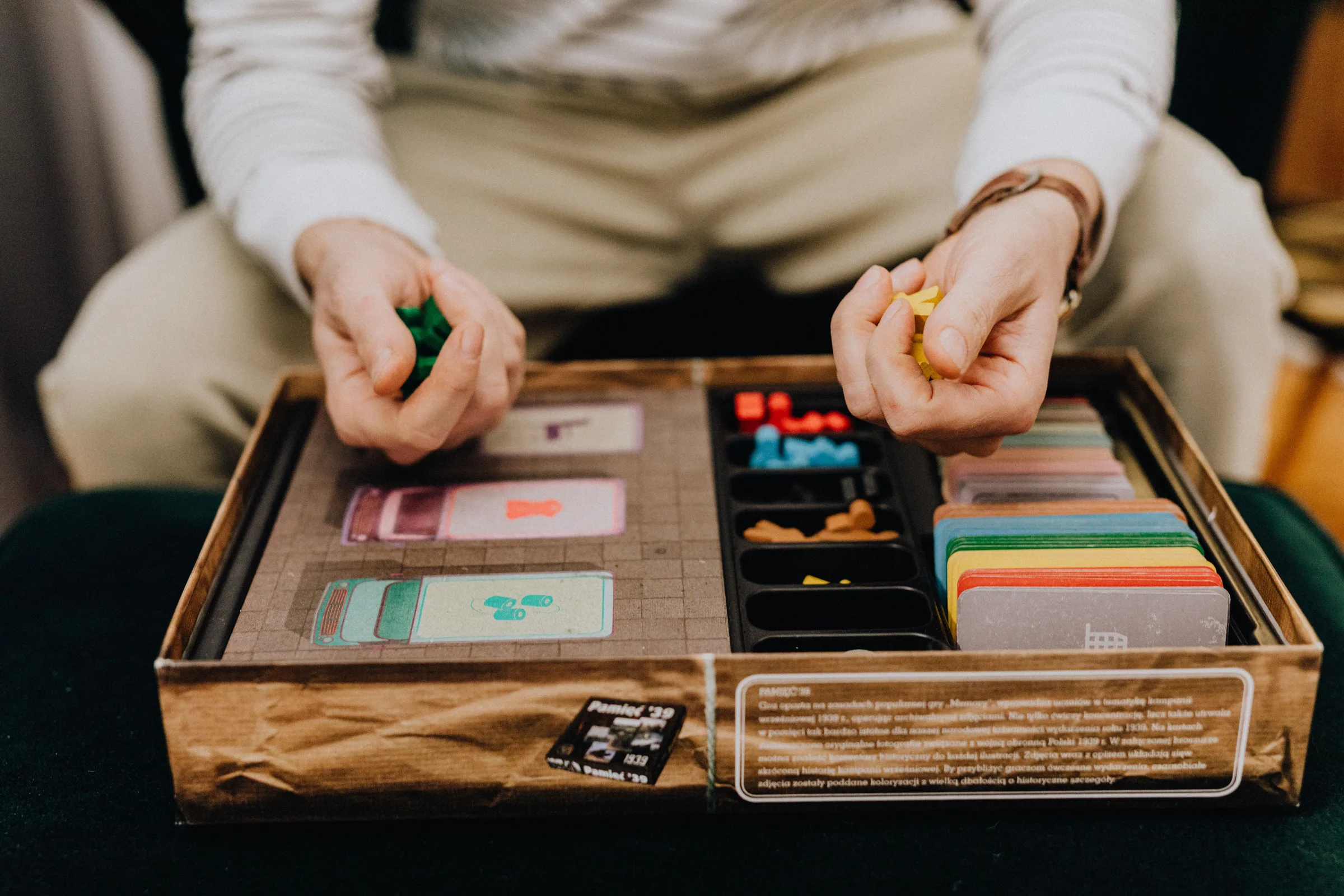
A custom or aftermarket box insert — a tray with molded compartments matching a specific game’s components — gives the fastest possible setup and teardown, since every piece has a fixed spot and nothing needs sorting after the first use. Inserts exist as official accessories for some popular games and as third-party or 3D-printed options for many others. They’re worth the extra cost or effort for a game played often enough that setup speed genuinely matters, but they’re overkill for something taken out once or twice a year, where a simple bag system does the job for a fraction of the cost.
A Simple System That Works for Most Collections
- Sort by category first (resource tokens, player pieces, cards) rather than trying to separate every individual sub-type on the first pass.
- Label bags or containers if the contents aren’t immediately obvious by sight — a few seconds writing a label saves confusion months later.
- Keep each player’s personal component set together in its own bag if the game hands out individual kits, rather than mixing all players’ pieces into one shared container.
- Do the sorting once, right after a play session, rather than waiting until the next time you want to play — it’s much faster to sort a small mess immediately than a fully scrambled box months later.
FAQ
Is it worth buying a commercial organizer insert for every game I own?
Not usually — it makes the most sense for games played often enough that setup time is a real recurring cost, and less sense for occasional games where a simple bag system is faster to set up in the first place.
What’s the best way to organize a game with dozens of nearly identical small tokens?
Small divided containers tend to work better than bags here, since seeing the tokens without opening anything makes it faster to grab the right quantity during setup.
Does sorting components void a game’s collector or resale value?
No — as long as all original pieces are kept and accounted for, how they’re organized inside the box doesn’t affect completeness. What matters for resale is that nothing is missing or damaged.